Red zebra cichlid: minimum tank size, how many and tank mates
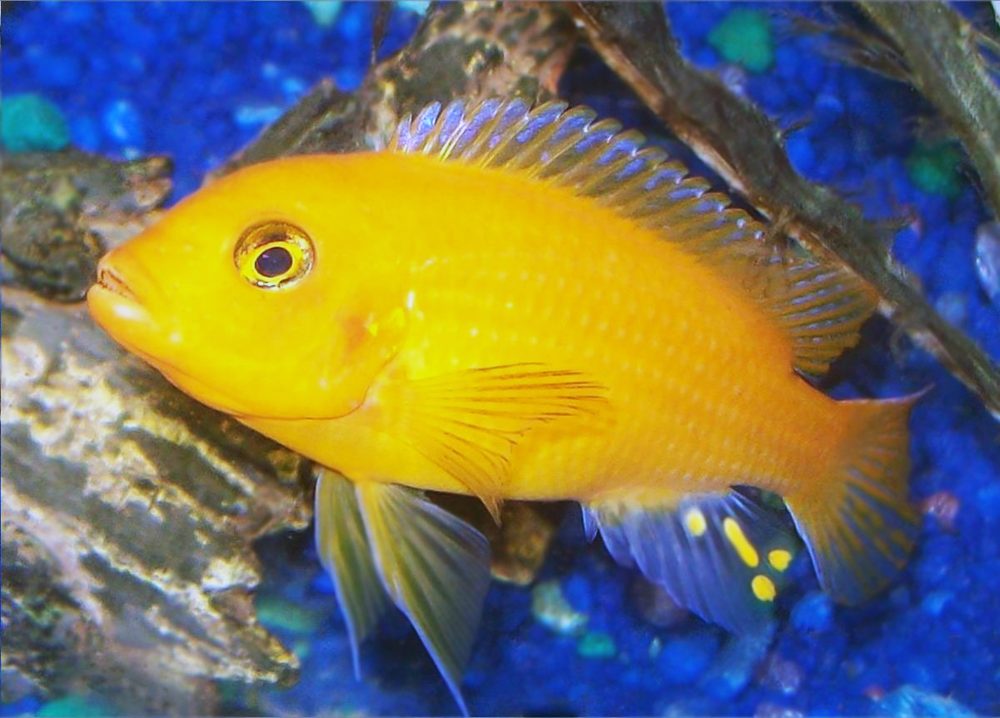
A Lake Malawi mbuna: hard, alkaline water, 1 male to several females, in a separate tank.
Quick facts
Red zebra cichlid: how many per tank?
Maximum recommended number if it is the only species in the tank (comfortable bioload of 75%). Below 36 gal / 137 L, this species is not recommended.
In practice
A 40-gallon (151 L) tank holds about 32 gal / 121 L of real water: up to 4 can live in it if this is the only species, or 4 if you leave room for other fish.
As it lives in groups of at least 4, you need at least 4 of them anyway, so a tank of 36 gal / 137 L or more.
Best tank mates
This species should have a tank of its own: no species in our database makes a good tank mate.
Equipment for a 36-gallon (137 L) tank (the minimum for this species)
- Heater essential (75–82 °F / 24–28 °C: a room at 68 °F / 20 °C is too cold): 125 W in a heated room, 200 W in a cold room.
- Filter: a flow of 110 to 180 GPH (410–680 L/h, 3 to 5 times the volume per hour).
- Electricity: about $8.60 a month for the heater, filter and lights (at an indicative $0.17/kWh).
Compatibility with other species
Compared with the 59 other species in our database: temperature, pH and behaviour. Also check that your tank is big enough for each of them.
✅ Compatible (0)
No species in our database.
⚠️ Avoid (59)
- Angelfish: incompatible pH (6.0–7.4); Red zebra cichlid should live only with its own species
- Bala shark: Red zebra cichlid should live only with its own species
- Betta (Siamese fighting fish): Red zebra cichlid should live only with its own species
- Black neon tetra: incompatible pH (5.0–7.5); Red zebra cichlid should live only with its own species
- Black phantom tetra: incompatible pH (5.0–7.0); Red zebra cichlid should live only with its own species
- Black skirt tetra: incompatible pH (6.0–7.0); Red zebra cichlid should live only with its own species
- Blue gourami: Red zebra cichlid should live only with its own species
- Boeseman's rainbowfish: Red zebra cichlid should live only with its own species
- Bolivian ram: incompatible pH (6.0–7.5); Red zebra cichlid should live only with its own species
- Bristlenose pleco: incompatible pH (6.0–7.5); Red zebra cichlid should live only with its own species
- Cardinal tetra: incompatible pH (4.5–7.5); Red zebra cichlid should live only with its own species
- Celestial pearl danio: incompatible pH (6.5–7.5); Red zebra cichlid should live only with its own species
- Cherry barb: Red zebra cichlid should live only with its own species
- Cherry shrimp: Red zebra cichlid should live only with its own species
- Chili rasbora: incompatible pH (4.5–7.0); Red zebra cichlid should live only with its own species
- Clown loach: incompatible pH (5.0–7.0); Red zebra cichlid should live only with its own species
- Cockatoo dwarf cichlid: incompatible pH (5.0–7.0); Red zebra cichlid should live only with its own species
- Common pleco: incompatible pH (6.0–7.5); Red zebra cichlid should live only with its own species
- Congo tetra: incompatible pH (6.0–7.5); Red zebra cichlid should live only with its own species
- Convict cichlid: Red zebra cichlid should live only with its own species; Convict cichlid should live only with its own species
- Discus: incompatible pH (5.0–7.0); Red zebra cichlid should live only with its own species
- Dwarf gourami: incompatible pH (6.0–7.5); Red zebra cichlid should live only with its own species
- Dwarf neon rainbowfish: incompatible pH (6.8–7.5); Red zebra cichlid should live only with its own species
- Ember tetra: incompatible pH (5.0–7.0); Red zebra cichlid should live only with its own species
- Endler's livebearer: Red zebra cichlid should live only with its own species
- German blue ram: incompatible pH (4.5–7.0); Red zebra cichlid should live only with its own species
- Glowlight tetra: incompatible pH (5.5–7.5); Red zebra cichlid should live only with its own species
- Goldfish: temperatures too different (50–75 °F (10–24 °C)); Red zebra cichlid should live only with its own species; Goldfish should live only with its own species
- Green neon tetra: incompatible pH (3.0–6.5); Red zebra cichlid should live only with its own species
- Guppy: Red zebra cichlid should live only with its own species
- Harlequin rasbora: incompatible pH (5.0–7.5); Red zebra cichlid should live only with its own species
- Honey gourami: incompatible pH (6.0–7.5); Red zebra cichlid should live only with its own species
- Julii cory: incompatible pH (5.8–7.2); Red zebra cichlid should live only with its own species
- Kribensis: incompatible pH (5.0–7.5); Red zebra cichlid should live only with its own species
- Kuhli loach: incompatible pH (5.5–7.0); Red zebra cichlid should live only with its own species
- Lemon tetra: incompatible pH (5.0–7.5); Red zebra cichlid should live only with its own species
- Lyretail killifish: incompatible pH (5.5–7.0); Red zebra cichlid should live only with its own species
- Marbled hatchetfish: incompatible pH (4.5–7.0); Red zebra cichlid should live only with its own species
- Molly: Red zebra cichlid should live only with its own species
- Neon tetra: incompatible pH (5.0–7.5); Red zebra cichlid should live only with its own species
- Oscar: incompatible pH (6.0–7.5); Red zebra cichlid should live only with its own species; Oscar should live only with its own species
- Otocinclus: incompatible pH (6.0–7.5); Red zebra cichlid should live only with its own species
- Panda cory: incompatible pH (6.0–7.4); Red zebra cichlid should live only with its own species
- Pearl danio: Red zebra cichlid should live only with its own species
- Pearl gourami: Red zebra cichlid should live only with its own species
- Peppered cory: incompatible pH (6.0–7.0); Red zebra cichlid should live only with its own species
- Platy: Red zebra cichlid should live only with its own species
- Pygmy cory: incompatible pH (6.4–7.4); Red zebra cichlid should live only with its own species
- Red-tailed shark: Red zebra cichlid should live only with its own species
- Rosy barb: temperatures too different (61–75 °F (16–24 °C)); Red zebra cichlid should live only with its own species
- Rummy-nose tetra: incompatible pH (5.5–7.0); Red zebra cichlid should live only with its own species
- Serpae tetra: incompatible pH (5.0–7.5); Red zebra cichlid should live only with its own species
- Sterba's cory: Red zebra cichlid should live only with its own species
- Swordtail: Red zebra cichlid should live only with its own species
- Tiger barb: Red zebra cichlid should live only with its own species
- White cloud mountain minnow: temperatures too different (57–72 °F (14–22 °C)); Red zebra cichlid should live only with its own species
- Yellow lab cichlid: Red zebra cichlid should live only with its own species; Yellow lab cichlid should live only with its own species
- Zebra danio: Red zebra cichlid should live only with its own species
- Zebra loach: incompatible pH (6.0–7.5); Red zebra cichlid should live only with its own species
Frequently asked questions
Red zebra cichlid: how many in a 20-gallon tank?
None: this species needs at least 36 gal / 137 L.
Red zebra cichlid: alone or in a group?
In a group of at least 4. Alone or in too small a group, the species is stressed and rarely shows itself.
Red zebra cichlid: what temperature and pH?
Water at 75–82 °F / 24–28 °C and a pH of 7.6–8.8. A heater is essential.
Red zebra cichlid and betta (Siamese fighting fish): compatible?
No: Red zebra cichlid should live only with its own species.
Red zebra cichlid and guppy: compatible?
No: Red zebra cichlid should live only with its own species.