Rummy-nose tetra: minimum tank size, how many and tank mates
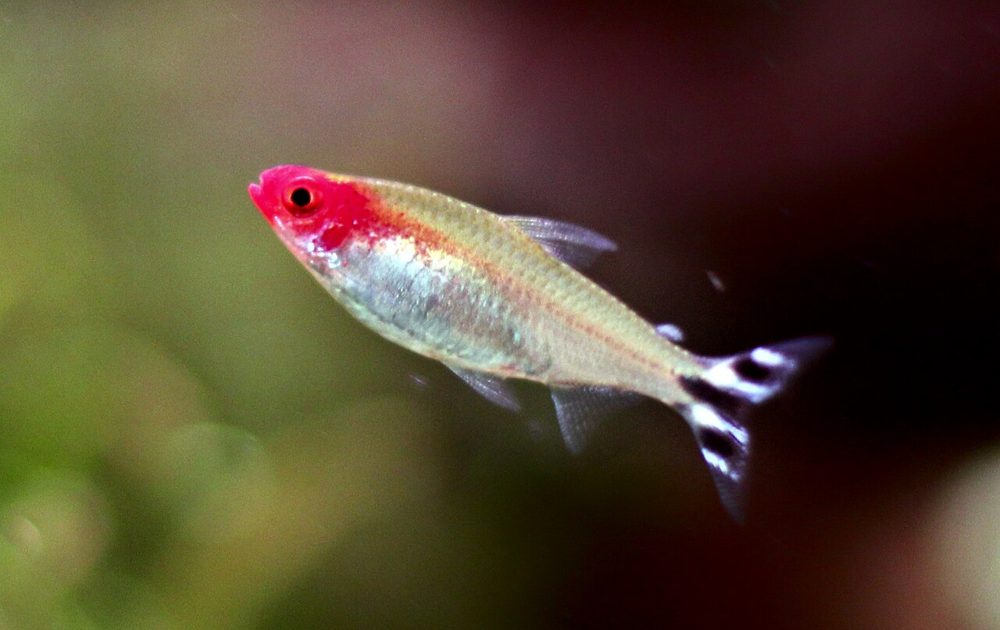
Forms a tight, active school: at least 10 fish and a tank 90 cm (36 in) long.
Quick facts
Rummy-nose tetra: how many per tank?
Maximum recommended number if it is the only species in the tank (comfortable bioload of 75%). Below 21 gal / 81 L, this species is not recommended.
In practice
A 29-gallon (110 L) tank holds about 23 gal / 88 L of real water: up to 21 can live in it if this is the only species, or 12 if you leave room for other fish.
As it lives in groups of at least 10, you need at least 10 of them anyway, so a tank of 21 gal / 81 L or more.
Best tank mates
Compatible species (temperature, pH and behaviour) that mostly live in another zone of the tank: they share the space instead of getting in each other's way.
 Marbled hatchetfishTop · 73–79 °F / 23–26 °C in common
 Peppered coryBottom · 73–79 °F / 23–26 °C in common
 Bristlenose plecoBottom · 73–79 °F / 23–26 °C in common
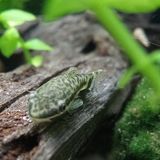 OtocinclusBottom · 73–79 °F / 23–26 °C in common
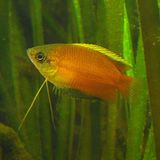 Honey gouramiTop · 73–79 °F / 23–26 °C in common
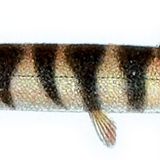 Kuhli loachBottom · 73–79 °F / 23–26 °C in common
Example tank with this species
29 gallons (110 L)
Calculated with the calculator's rules: 75% target bioload, minimum group sizes respected, no compatibility warning.
- 10 Rummy-nose tetra
- 10 Marbled hatchetfish
- 6 Peppered cory
Equipment for a 21-gallon (81 L) tank (the minimum for this species)
- Heater essential (73–79 °F / 23–26 °C: a room at 68 °F / 20 °C is too cold): 75 W in a heated room, 125 W in a cold room.
- Filter: a flow of 65 to 105 GPH (240–400 L/h, 3 to 5 times the volume per hour).
- Electricity: about $5.10 a month for the heater, filter and lights (at an indicative $0.17/kWh).
Compatibility with other species
Compared with the 59 other species in our database: temperature, pH and behaviour. Also check that your tank is big enough for each of them.
✅ Compatible (49)
Bala sharkBetta (Siamese fighting fish)Black neon tetraBlack phantom tetraBlack skirt tetraBlue gouramiBolivian ramBristlenose plecoCardinal tetraCelestial pearl danioCherry barbCherry shrimpChili rasboraClown loachCockatoo dwarf cichlidCommon plecoCongo tetraDwarf gouramiDwarf neon rainbowfishEmber tetraEndler's livebearerGlowlight tetraGreen neon tetraGuppyHarlequin rasboraHoney gouramiJulii coryKribensisKuhli loachLemon tetraLyretail killifishMarbled hatchetfishMollyNeon tetraOtocinclusPanda coryPearl danioPearl gouramiPeppered coryPlatyPygmy coryRed-tailed sharkRosy barbSerpae tetraSterba's corySwordtailTiger barbZebra danioZebra loach
⚠️ Avoid (10)
- Angelfish: Angelfish may eat Rummy-nose tetra
- Boeseman's rainbowfish: temperatures too different (81–86 °F (27–30 °C))
- Convict cichlid: Convict cichlid should live only with its own species
- Discus: temperatures too different (79–86 °F (26–30 °C))
- German blue ram: temperatures too different (81–86 °F (27–30 °C))
- Goldfish: Goldfish should live only with its own species
- Oscar: Oscar may eat Rummy-nose tetra; Oscar should live only with its own species
- Red zebra cichlid: incompatible pH (7.6–8.8); Red zebra cichlid should live only with its own species
- White cloud mountain minnow: temperatures too different (57–72 °F (14–22 °C))
- Yellow lab cichlid: incompatible pH (7.7–8.6); Yellow lab cichlid should live only with its own species
Frequently asked questions
Rummy-nose tetra: how many in a 20-gallon tank?
None: this species needs at least 21 gal / 81 L.
Rummy-nose tetra: alone or in a group?
In a group of at least 10. Alone or in too small a group, the species is stressed and rarely shows itself.
Rummy-nose tetra: what temperature and pH?
Water at 73–79 °F / 23–26 °C and a pH of 5.5–7. A heater is essential.
Rummy-nose tetra and betta (Siamese fighting fish): compatible?
Yes: 73–79 °F / 23–26 °C and pH 6–7 in common, and no known behaviour conflict in our database. Make sure the tank holds at least 21 gal / 81 L.
Rummy-nose tetra and guppy: compatible?
Yes: 73–79 °F / 23–26 °C and pH 7 in common, and no known behaviour conflict in our database. Make sure the tank holds at least 21 gal / 81 L.